
Blog post by Jenny Johnson
Cooktops; Gas, Electric or Induction
I have never used an induction cooktop and have done very little cooking on an electric cooktop, so to be fair I thought it best to seek unbiased information from another source. http://www.build.com.au/gas-vs-electric-vs-induction-cooktops was my source of information.
Please note; I have added my own touch to the content and once again managed to learn quite a bit along the way, thanks Build.
How do I choose?
One of the more vexing questions, when you’re choosing appliances, is deciding on what sort of cooktop you need. Gas & electric cooktops have been around for years and most of us would have cooked on either or both; Induction, however, is a fairly new player that has gained momentum over the past few years.
If you’re like me you may not know too much about induction cooktops or how they work. When you’re deciding on your new cooktop, generally speaking, you’ll need to decide between one of four options or a combination of two, hopefully, this makes your choice a little easier:
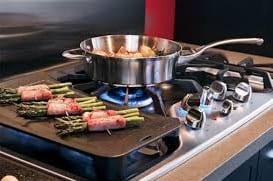
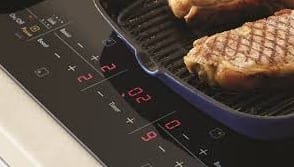
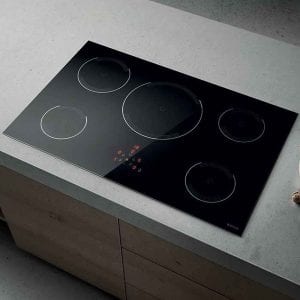
- Electric induction cooktop– Induction cooktops work using an alternating current to induce heat in the right kinds of cookware, and are safe to the touch.
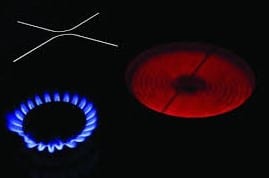
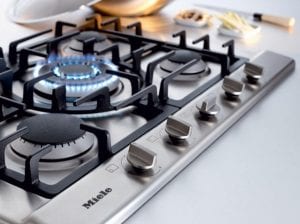
- Gas flame burners– These burn gas to apply heat directly to your cookware.
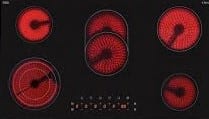
- Electric ceramic radiant cooktops– These consist of coiled metal elements or halogen lamps which radiate heat from below through a tempered ceramic glass surface.
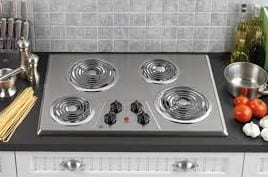
- Electric coil or solid hotplate cooktops– These cooktops are normally cheaper, and operate by running electricity through a resistive coil element or solid hotplate to heat cookware directly.
Most cooktops will incorporate either two, four or six hotplates of various sizes using only one of these technologies, there are other cooktops that provide a combination of these technologies (e.g. radiant and induction, or induction and gas) are also available.
How do induction cooktops work?
To appreciate why induction cooktops are considered ‘safer’ and why they’re becoming more popular, you need to understand how they create heat. Induction cooktops contain metallic elements under the cooktop surface. An alternating current is passed through these elements when the cooker is turned on, which oscillates back and forth through the elements.
This current doesn’t have any effect at all on most other kinds of materials – including human hands, but it does create an electromagnetic field at the cooking surface. If your pots or pans are made from the right kind of metal, this field ‘induces’ an electrical current in the base of the cookware you’re using. This electrical current in the cookware produces what’s known as ‘resistive heating’ – the pot or pan itself is heated, but the cooktop surface isn’t.
Some of the heat from the hot cookware you’re using will be transferred back into the cooktop surface, but this is normally made from a ceramic glass which is a pretty poor conductor of heat, so it shouldn’t stay too hot for too long.
What types of cookware work with induction cooktops?
To work with induction cooktops, your cookware needs to be ‘ferromagnetic’ – stainless steel or iron pots and pans work well, whereas aluminum doesn’t. An easy way to tell if your pots and pans will work on an induction cooktop is to see if they’ll stick to a magnet. If they do stick, they should work on your induction cooker.
If you already have a lot of non-ferrous cookware that won’t work on an induction cooktop, you still have options though. An induction disc (or ‘interface disc’ as it’s sometimes known) is a stainless steel disc that you can use on an induction cooktop to heat your incompatible cookware. These are normally quite inexpensive and come in a range of different sizes.
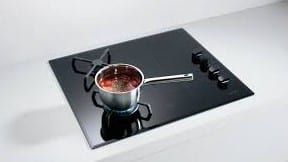
Advantages and disadvantages of different types of cooktops
The best fit for your needs will depend on what sort of budget you have, what sort of fuel is available and to some extent, what kinds of foods you want to cook. Below are some of the advantages and disadvantages of gas, induction and other electric ranges:
Advantages
Disadvantages
Induction Cooktops:
- Safe to the touch – good for those with small kids
- Very energy efficient compared to other electric cooktops
- Heats instantly – very little warm-up time
- Looks stylish
- The flat surface is easy to clean – food doesn’t ‘bake’ on
- Can be expensive
- Requires ferromagnetic (i.e. stainless steel or iron) cookware
- May be complicated to repair or replace
Electric Coil or Hotplate Cooktops:
- Cheap to buy and repair
- Works with any type of cookware
- Good for low-temperature cooking and simmering
- Slow to heat up
- Slow to change temperatures in general
- Relatively inefficient
·Electric Ceramic Radiant Cooktops:
- Looks fantastic
- The flat surface is easy to clean
- Reasonably responsive to changes in temperature
- Works with any type of cookware
- More expensive than conventional coil or hotplate cooktops
- May be complicated to repair
Gas Cooktops:
- Instant heat
- Very responsive to changes in temperature
- Cheap to operate
- Can accommodate wok burners and special trivets
- Can char-grill capsicums on the open flames like they do on TV.
- Requires a supply of gas
- Harder to clean than flat induction or radiant cooktops (enamel is easier to clean than steel or glass)
- Greater risk of fire or combustion due to the open flame
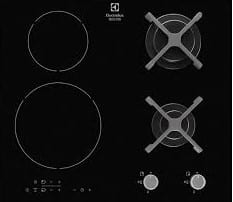
How to choose a cooktop
Beyond considering the basic advantages and disadvantages of different cooktop technologies, there are a few key questions you need to answer to get the right cooktop. These include:
- Would a combination of gas, radiant, coil or induction cookers better suit your needs than just a single technology?
- How big is your family? If you have a large family or do a lot of cooking, six burners may be a better option than four.
- If you’re getting a gas cooktop, will you need or use a wok burner?
- How long is the warranty?
- Is the brand well established and popular in Australia? If not, you may have a hard time with warranty claims and support.
- Will I need new cookware to go with a new induction cooktop?
- Will the style of my cooktop suit the style of my kitchen?